Showing posts with label Cognac. Show all posts

Friday, July 18, 2014

Friday Cocktail: Champs-Élysées

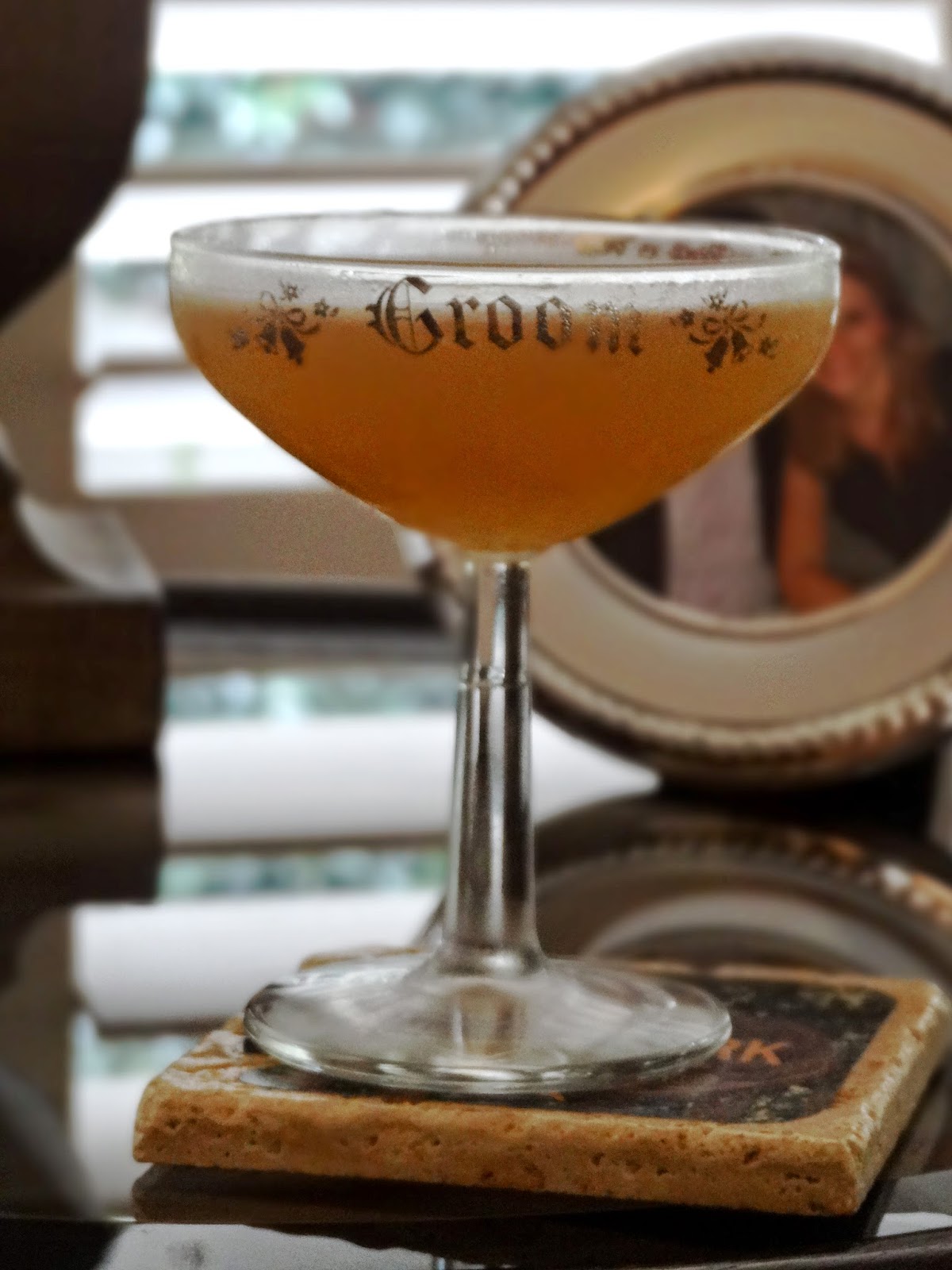
And we're back!  I've been pretty delinquent in posting Friday cocktails here, and even more delinquent in food-related posts, but forget all that and make this drink.  Today's cocktail, the Champs-Élysées, is very similar to the Sidecar but uses Green Chartreuse for some added complexity (and kick), rather than Cointreau. This one manages to be both complex and refreshing at the same time, a perfect drink for the unusually cool July weather we've had this week.  Santé!

Champs-Élysées
Harry Craddock, The Savoy Cocktail Book (1930)

- 2 oz. Cognac (Pierre Ferrand Ambre)
- .5 oz. Green Chartreuse
- .75 oz. Lemon Juice
- .25 oz. Simple Syrup
- 1 dash Angostura Bitters

Combine ingredients in cocktail shaker with ice and shake vigorously.  Double strain into chilled coupe glass and garnish with lemon twist.

Friday, June 13, 2014

Friday Cocktail: Two New Orleans Classics

In preparation for my wedding anniversary trip to New Orleans this weekend, I thought it was appropriate to hit a couple of classic Crescent City cocktails.  Outside of New York, New Orleans may be one of the best cocktail destinations in the country. It is host to the awesome Tales of the Cocktail festival hosted every summer and is also responsible for classics such as the Sazerac and Vieux Carré.

Sazerac
Adapted form Wiliam Boothby, World Drinks and How to Mix Them, 1908

The Sazerac is the cocktail most synonymous with New Orleans. In fact, the Louisiana legislature made it the official cocktail of New Orleans in 2008.  As with many cocktails, it was originally made with cognac at the Sazerac Coffee House. When Thomas H. Handy became the owner of the establishment in the late 1800s, he replaced the cognac with rye.  It was this recipe that was published in Boothby's classic, World Drinks and How to Mix Them in 1908. It is an Old Fashioned variant that is served without ice and takes on a lot of anise flavor from both the New Orleans staple Peychaud's bitters and the absinthe or Herbsaint rinse. There are very few cocktails that are its equal.

- 2 oz. Rittenhouse or Sazerac Rye 
- 3 dashes Peychaud's Bitters
- 2 dashes Angostura Bitters
- 1 Demerara Sugar Cube or .25 oz. Demerara Simple Syrup
- St. George Absinthe Verte*

Muddle the sugar and bitters with a few drops of water (or add the simple syrup). Add whiskey and ice, and strain and stir into an ice cold absinthe-rinsed rocks glass. Twist lemon peel over surface and discard.

*For an interesting variation, rinse the glass with a peaty scotch like Laphroaig instead of the absinthe.

Vieux Carré
Adapted from Stanley Clisby Arthur, Famous New Orleans Drinks, 1937

The Vieux Carré was invented at the Hotel Monteleone by Walter Bergeron, and the Monteleone's rotating Carousel Bar is still my favorite place to order one. The story is that the ingredients in the Vieux Carré were meant pay tribute to the different ethnic groups of the city. The cognac and Benedictine were an homage to the city's French influence, the vermouth a nod to the Italian heritage, the rye referenced the American influence, and the bitters represent the Caribbean. It picks up plenty of sweetness from the Benedictine without becoming cloying.

- 1 oz. Rittenhouse or Sazerac Rye
- 1 oz. Cognac (I use Leopold or Pierre Ferrand Ambre)
- 1 oz. Carpano Antica Sweet Vermouth
- .25 oz. Bénédictine
- 1 dash Angostura Bitters
- 1 dash Peychaud's Bitters

Stir with ice and strain over large ice cube into a chilled rocks glass. Twist and discard lemon.
Friday, May 23, 2014

Friday Cocktail: The Sidecar

For me, the quintessential brandy cocktail is the Sidecar. Dating back to the 1920s, there are two schools of thought about the correct proportions for the cognac, Cointreau, and lemon juice. The original drink was made with equal parts of each ingredient (1:1:1), in what is known as the "French School" style. I prefer the "English School" variation, which appears in the Savoy Cocktail Book (1930). This version uses a 2:1:1 ratio -- two parts cognac and 1 part each of the Cointreau and lemon juice. Some recipes call for sugar along the rim of the glass. Please don't do that.

The Sidecar
As modified in the Savoy Cocktail Book, 1930

- 1.5 oz. Cognac (Pierre Ferrand or Léopold Gourmel work well)
- .75 oz. Cointreau* 
- .75 oz. lemon juice

Pour all three ingredients into a cocktail shaker filled with ice. Shake vigorously and strain into a chilled coupe. No garnish.

*For a drier cocktail, use Pierre Ferrand Dry Curaçao

Wednesday, April 30, 2014

The Well-Made Mint Julep


The mint julep still lives, but it is by no means fashionable. Somehow the idea has gotten abroad that the mint ought to be crushed and shaken up with water and whiskey in equal proportions. No man can fall in love with such a mixture. Poor juleps have ruined the reputation of the South’s most famous drink.
- Georgia newspaper, 1860s
As I prepare to leave for my annual Kentucky Derby trip, it seems fitting to do a post on juleps. A properly made mint julep is a thing to behold: ice cold, boozy and fragrant. A poorly made julep, however, is disgustingly sweet. Ironically, Churchill Downs serves one of the worst offenders at the Derby, a pre-bottled Early Times julep. It's not their fault, I suppose. You can't make that many mint juleps to order. But at home, you can experience the full potential of this great drink.

Most don't realize that a julep can be made with anything but bourbon, yet prior to the Civil War, genteel Southerners drank their juleps with brandy. Both versions are incredibly refreshing on a hot day. Whatever the base spirit used, there are a few rules to making a well-made julep.
  • Use good bourbon (or brandy). The base spirit is the star of this drink, so use the good stuff.
  • Do not over-muddle the mint. Doing so releases bitter chlorophyll in addition to the fragrant oils.
  • Use a proper vessel. A silver julep cup is preferable, but any metal cup will work.
  • Use the highest proof spirit you can find.  The drink has a lot of ice and will dilute quickly. For bourbon, I recommend high rye and high proof.  Four Roses Single Barrel and Old Grand Dad 114 are my personal favorites.
  • Go easy on the simple syrup. You can always add more.
  • Smash the ever-loving sh*t out of your ice. Either get a Lewis bag or use a kitchen towel and pulverize the ice with a mallet or rolling pin.  You are looking for ice that resembles gravel.
  • Slap a bunch of fresh mint to use for garnish.  The aroma this creates adds tremendously to the drink.
Now, some recipes.


The Classic Bourbon Mint Julep

- 10 mint leaves
- .25 to .5 oz. strong simple syrup (2:1 ratio)
- 3 oz. high rye, high proof bourbon*
- Mint sprig to garnish
Put the mint and simple syrup into the julep cup and lightly muddle the mint with the back of a bar spoon. 5 seconds should be sufficient. Add bourbon and fill with crushed ice. Stir the drink to combine and add more ice. Slap mint sprig and stick into drink for garnish and aroma.
*For a brandy julep, simply substitute good cognac for the bourbon.

The Georgia Mint Julep
Adapted from Professor Jerry Thomas (1862)*


- 10 mint leaves
- 2 oz. Cognac (I prefer Léopold Gourmel VSOP)
- 1 oz. Combier Pêche de Vigne 
- Mint sprig to garnish
Put the Combier peach liqueur into the julep cup with the mint leaves and lightly muddle the mint with the back of a bar spoon. Add the cognac and fill the cup with ice. Stir to combine and top with more ice and a mint sprig.


*Professor Jerry Thomas's recipe from the classic Bar-tenders Guide, Or How To Mix Drinks (1862) calls for peach brandy.  Unfortunately, there are no quality peach brandies in existence, as far as I'm aware. As a result, I prefer to substitute high quality peach liqueur (which contains a lot of sugar) and omit the sugar completely, which yields a superior drink.

And finally, the greatest tutorial (and history lesson) in the known world for making juleps by bartender extraordinaire Chris McMillan, along with a recitation of poetry by Kentucky writer Joshua Soule Smith.


Happy Derby!